
What Type of Damper is Best? Pros and Cons of Each Type
If you have a fireplace, you’re probably familiar with the simple act of closing your chimney after the fire goes out. It keeps warm air inside and keeps cold air, snow, and drafts outside. But did you know there are actually two different types of mechanisms that open and close your chimney? These are called top-mount dampers and throat dampers. Knowing the difference can help you protect your chimney, save energy, and even keep unwanted guests out.
 Why Should You Close a Chimney?
Closing your chimney isn’t just a matter of habit. There are a few important reasons to do it, but always remember never to close a damper while the fire is still burning. Doing so can trap dangerous carbon monoxide inside your home.
Once the fire is out, shutting the chimney helps:
- Keep warm air in: You don’t want all the heat your fire creates to escape up the chimney.
- Keep the elements out: Rain, snow, and wind can easily get into an open chimney.
- Keep wildlife out: Birds, bats, and even raccoons can see an open chimney as a convenient home.
What is a Top-Mount Damper?
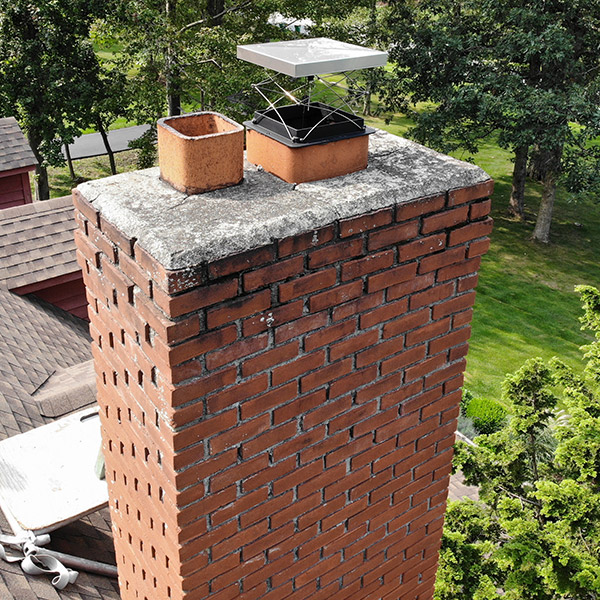
A top-mount damper sits at the very top of the chimney, right at the crown. They’re more common in newer homes and are gradually replacing older throat dampers.
Advantages:
- Full protection: Leaves, debris, rain, and snow are all blocked from entering the chimney.
- Prevent moisture problems: Moisture that seeps into the chimney can lead to mold or algae over time.
- Also stops animals: Birds, bats, and other wildlife cannot enter the chimney when this damper is closed.
Disadvantages:
- Cost: Top-mount dampers are usually more expensive than throat dampers because of their placement at the top of the chimney.
- Heat loss: A top-mount damper can allow more warm air to escape up the chimney, potentially increasing heating costs slightly.
Throat Dampers and How They Work.
A throat damper sits just above your fireplace, in the “throat” of the chimney. This type is more common in older homes.
Throat dampers are usually made of cast iron or stainless steel and move on tracks or use a pulldown handle to open and close. Their purpose is the same as that of a top-mount damper: sealing your fireplace from outside elements.
Advantages:
- Energy efficiency: Because it sits lower in the chimney, a throat damper tends to keep more heat in your home.
- Lower cost: Generally cheaper to install than a top-mount damper.
Disadvantages:
- Limited protection: Throat dampers don’t seal the top of the chimney. Leaves, snow, rain, and wildlife can still enter above the damper.
- A throat damper, exposed to creosote and soot from fires, requires frequent cleaning and adjustment.
Which Damper is Best for Your Needs?
For most homes, a top-mount damper is the superior choice. It seals off the entire chimney, protects against moisture, debris, and wildlife, and extends its life.
That said, if you live in a dry climate with minimal rainfall or wildlife activity, a throat damper is often sufficient. It also keeps more heat in your home, which may save on energy costs.
To Sum Up
Both dampers keep your chimney closed when it’s not in use. If the goal is long-term chimney protection, a top-mount damper is usually the best choice. If your focus is energy efficiency in a low-risk environment, a throat damper may be perfectly adequate.
Either way, knowing the difference helps you make the right decision for your home, your heating bills, and the safety of your fireplace.
American Fireplace and Chimney Knows Dampers
If you need to replace a worn-out throat damper with a new top-mount damper, or vice versa, we can help you. Not only will we inspect and sweep your chimney, but we can also insert dampers. Contact us today if you are having problems with your damper. One of our helpful staff members will gladly schedule an inspection of your damper. Don’t wait until your damper doesn’t work; get in touch now.